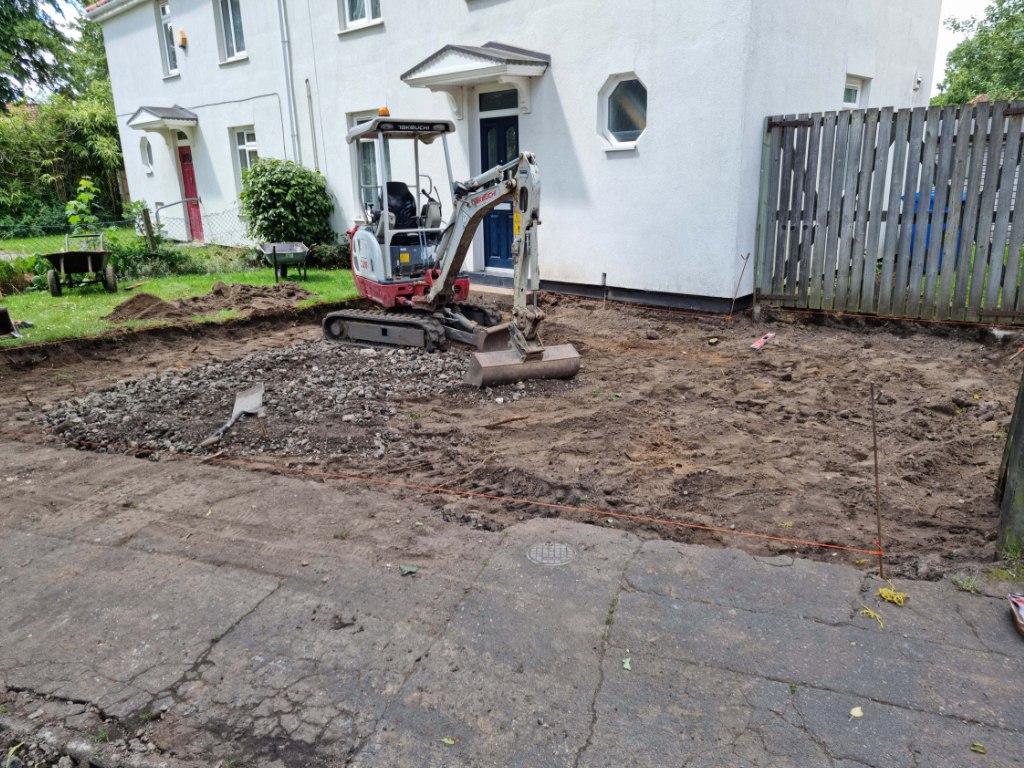
Can Professional Driveway Repairs Fix Damage Caused by Poor Ground Preparation?
A driveway can develop cracks, depressions and uneven areas even when the visible surface initially appeared well installed. In many cases, these defects begin below the surface because the ground or supporting layers were not prepared adequately.
Professional driveway repairs can often restore areas affected by poor ground preparation, but the work must address the underlying weakness rather than simply cover the visible damage. For property owners in Farnham, Surrey, a proper assessment is the first step towards determining whether a local repair or more extensive reconstruction is required.
How Poor Ground Preparation Affects a Driveway
A driveway relies on its foundation to distribute vehicle loads and keep the surface stable. If soft ground is left untreated, unsuitable material remains beneath the driveway or the sub-base is poorly compacted, movement can develop under repeated use.
Common signs of inadequate preparation include:
- Sunken sections or wheel tracks
- Cracks that return after repair
- Loose or rocking paving blocks
- Tarmac breaking around depressions
- Uneven surface levels
- Water collecting in low areas
- Crumbling edges
- Movement around drainage channels
- Different parts of the driveway settling at different rates
These symptoms may appear gradually as traffic and rainfall expose weaknesses below the surface.
Why the Sub-Base Is So Important
The sub-base sits between the natural ground and the finished driveway. Its role is to spread vehicle loads and provide a firm, consistent platform for the upper layers.
If the sub-base is too shallow, made from unsuitable material or inadequately compacted, it may shift or compress. The surface above then loses support and begins to move.
Repairing only the top layer will not provide a dependable result if the weakened sub-base remains in place. The affected area may need to be opened so that the supporting material can be rebuilt and compacted correctly.
Soft or Unstable Ground Can Cause Settlement
Ground conditions can vary across a single driveway. One section may be firm, while another contains soft soil, disturbed material or ground that retains water.
If these variations are not identified before installation, individual areas can settle at different rates. This commonly creates depressions, dips and changes in surface level.
Professional repairs may involve excavating the unstable section, removing unsuitable material and installing a stronger foundation. The repair must extend far enough to reach stable surrounding ground.
Poor Compaction Creates Hidden Weaknesses
Sub-base material should be installed in suitable layers and compacted methodically. Placing too much material at once can leave deeper sections loose, even if the surface feels firm.
Repeated vehicle movements then compress these hidden voids, causing the driveway to sink. Turning areas and regular parking positions are often affected first because they experience concentrated loads.
Corrective work requires the loose material to be removed or recompacted before the surface is reinstated.
Drainage Problems Can Weaken the Foundation
Poor drainage can allow water to enter the driveway’s supporting layers. Saturated ground may lose stability, while moving water can wash fine particles out of the sub-base and create voids.
A successful repair must therefore consider how rainwater reaches and leaves the area. This may involve correcting surface gradients, reinstating drainage channels or improving weak edge details.
Filling a depression without addressing the water problem can result in further settlement.
How Tarmac Repairs Address Foundation Failure
Where tarmac has sunk or cracked because of poor preparation, the damaged section may need to be cut out rather than patched at surface level.
A suitable repair can involve:
- Removing the failed tarmac
- Excavating loose or unstable material
- Rebuilding the sub-base
- Compacting each layer thoroughly
- Restoring the correct surface level
- Installing and compacting new tarmac
- Sealing the joint with the surrounding surface
The edges of the repair should reach sound material so that the new section receives adequate support.
Repairing Sunken Block Paving
Block paving is made from individual units, which allows affected sections to be lifted. However, relaying the same blocks over an unchanged foundation will not resolve the problem.
Professional repair usually involves removing the blocks, correcting the sub-base and reinstating an even laying course. The blocks can then be relaid, compacted and re-jointed.
The surrounding paving should also be examined for movement because settlement may extend beyond the most visibly sunken area.
When Localised Repairs May Be Suitable
A focused repair can be effective when the foundation problem is restricted to one or two areas and the rest of the driveway remains stable.
Local repair may be appropriate when:
- Settlement is confined to a clearly defined section
- Surrounding levels remain consistent
- Drainage can be corrected within the affected area
- The main driveway structure is sound
- There is no widespread cracking or movement
- Existing materials can be integrated with the repair
The inspection should establish the full extent of the weakness before excavation begins.
When Wider Reconstruction May Be Needed
Local repairs become less suitable when damage appears across several sections or continues to return. Widespread settlement may indicate that the entire foundation was installed incorrectly.
Signs that broader reconstruction should be considered include:
- Numerous depressions across the driveway
- Cracking in several unrelated areas
- Extensive movement under vehicle loads
- Persistent standing water
- Failing edges around much of the surface
- Previous repairs sinking again
- Large differences in surface level
In these circumstances, repeated patching may treat individual symptoms without creating a consistently stable driveway.
Why a Professional Assessment Matters
The appearance of the surface does not always reveal what has happened below it. Cracking could result from sub-base movement, poor drainage, weak edges or a combination of factors.
A professional driveway assessment considers:
- The pattern and location of the damage
- Ground and sub-base stability
- Vehicle movements
- Surface gradients
- Drainage performance
- Edge support
- Previous repair history
This information helps determine how much material must be removed and what preparation is needed before resurfacing.
Conclusion
Professional driveway repairs can correct damage caused by poor ground preparation when the unstable material is properly identified and removed. Rebuilding the foundation, restoring drainage and providing adequate edge support are essential for a lasting result.
NS Driveways Farnham provides professional driveway assessments and repairs in Farnham, Surrey. If your driveway is sinking, cracking or becoming uneven, contact the team to determine whether a local repair or wider reconstruction is the most suitable solution.
Call us on: 01252 941 699
Click here to find out more about NS Driveways Farnham
Click here to complete our contact form and see how we can help with your driveway needs.