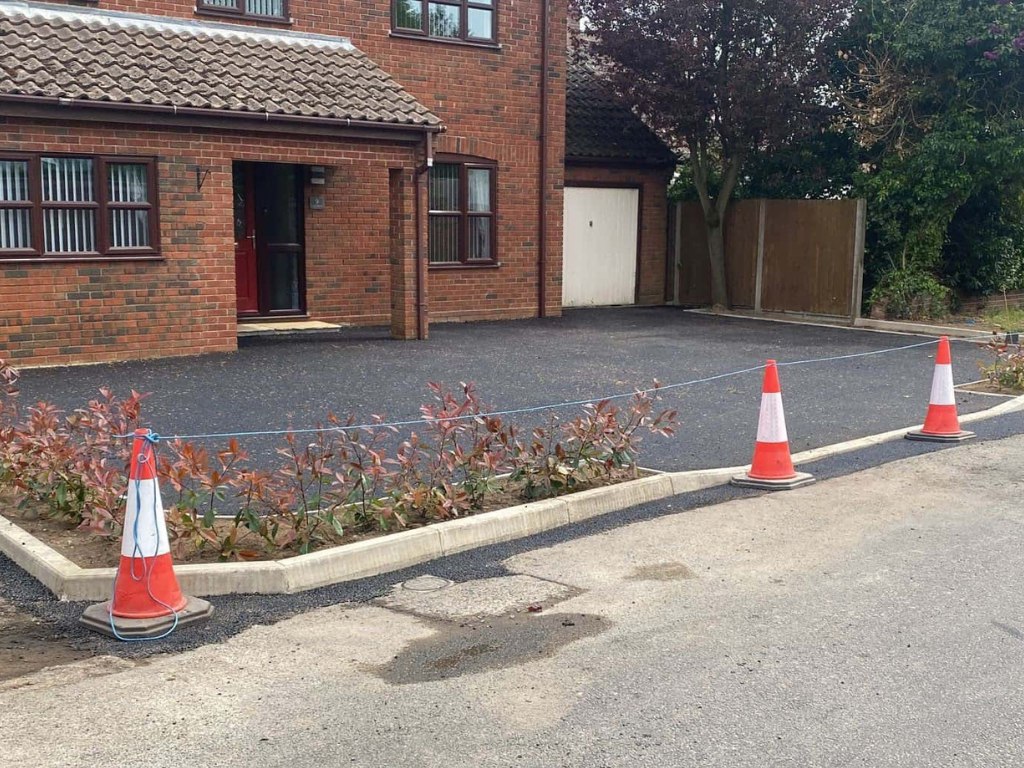
Would Resurfacing Fix a Tarmac Driveway That Has Been Patched Several Times?
Deciding Whether a New Surface Can Provide a Lasting Solution
Individual tarmac repairs can be effective when damage is confined to a small area. However, a driveway that has been patched several times may eventually look uneven and develop cracks around the joints between old and repaired sections.
Resurfacing can give a worn driveway a continuous new surface, but it is only suitable when the structure underneath remains stable. For property owners in Farnham, Surrey, a careful assessment is essential before deciding whether resurfacing will resolve the problem or simply conceal deeper defects.
What Does Tarmac Resurfacing Involve?
Resurfacing involves preparing the existing driveway and installing a new tarmac layer over it. The aim is to create a uniform, durable surface without removing every part of the original construction.
Preparation may include cleaning the driveway, removing loose material, correcting isolated defects and adjusting levels where necessary. Edges, drainage points and transitions must also be considered so that the new layer is properly supported.
Why Several Patches Can Become a Problem
Every patch introduces a joint between materials of different ages and conditions. These areas may respond differently to vehicle loading, temperature changes and moisture.
Over time, the driveway may develop:
- Cracks around the edges of repairs
- Slight differences in surface level
- Patches that sink or lift
- Uneven colour and texture
- Water collecting beside repaired areas
- New damage appearing between old patches
Resurfacing can cover the visual inconsistency, but its long-term performance depends on whether those repaired areas have stopped moving.
When Resurfacing Is Likely to Be Suitable
A previously patched driveway may be a good candidate for resurfacing when the existing base remains firm and the damage is mainly confined to the upper surface.
Positive signs include:
- Repairs that remain stable under regular use
- No widespread sinking or movement
- A generally even driveway profile
- Effective drainage
- Firm edges
- Cracking that is shallow rather than structural
- An existing surface that can be prepared to receive new material
In these circumstances, resurfacing can unite the patched sections beneath a consistent new finish.
The Existing Patches Must Be Checked First
Old repairs should not simply be covered without inspection. Each patch needs to be checked for movement, loose edges and deterioration in the surrounding tarmac.
Any unstable material should be removed and corrected before the new surface is installed. Otherwise, movement beneath the resurfacing layer can cause cracks or depressions to reappear above it.
Resurfacing Will Not Correct a Failing Sub-Base
The sub-base distributes vehicle loads and supports the tarmac above. If it has been poorly compacted, weakened by water or disturbed by ground movement, a new surface layer will not restore its strength.
Possible signs of sub-base failure include:
- Deep or widespread depressions
- Cracks that repeatedly return after repair
- Areas that move under vehicle use
- Numerous potholes across the driveway
- Long sections that have become uneven
- Damage spreading beyond previous patches
Where these symptoms are present, the affected sections may need to be excavated and reconstructed before resurfacing can be considered.
Drainage Must Be Addressed Before Resurfacing
Repeated patching sometimes develops around areas where water regularly collects. If the driveway has inadequate falls, sunken sections or restricted outlets, resurfacing without correcting the drainage may allow deterioration to continue.
The planned surface levels should direct rainwater effectively. Thresholds, adjoining paths, garage entrances and drainage channels must all be considered before additional material raises the height of the driveway.
Cracks Can Reflect Through a New Surface
Cracks in the existing driveway can eventually become visible through a resurfacing layer if the movement causing them continues. This is sometimes known as reflective cracking.
Isolated, stable cracks may be prepared as part of the resurfacing process. Extensive interconnected cracking is more concerning because it can indicate that the existing construction is no longer acting as a stable base.
Edges Need Sufficient Support
A resurfaced driveway needs secure edges to prevent the new tarmac from spreading or breaking away. Existing borders should be checked for movement, deterioration and suitable height.
Where the original driveway has crumbled along the sides, local reconstruction or new edge support may be necessary. Covering unsupported edges is unlikely to produce a reliable finish.
When Partial Reconstruction May Be Combined With Resurfacing
A driveway does not always need to be treated entirely in one way. If most of the base remains sound but one or two areas have failed, those sections can sometimes be reconstructed before the whole driveway is resurfaced.
This combined approach can be suitable where:
- Damage is deeper in clearly defined locations
- The remaining driveway is stable
- Drainage can be corrected during preparation
- Failed patches can be removed completely
- The finished levels will remain practical
The key is to repair every unstable area before applying the continuous surface layer.
When Full Reconstruction May Be More Appropriate
Resurfacing becomes less suitable when defects affect most of the driveway. Continually covering an unstable structure can lead to recurring cracks, sinking and further patching.
More extensive reconstruction may be appropriate where there is widespread base failure, significant distortion, poor overall drainage or extensive movement between old repairs. This allows the supporting layers and surface to be rebuilt as a coordinated system.
Why Professional Assessment Matters
The condition visible at the surface tells only part of the story. A professional assessment considers how the driveway behaves under use, where water collects and whether the previous repairs remain stable.
It should examine:
- The pattern and depth of cracking
- The condition of existing patches
- Surface levels and drainage
- Base stability
- Edge support
- Access points and thresholds
- The extent of any loose or crumbling material
This information determines whether preparation and resurfacing will be sufficient or whether deeper work is needed first.
Conclusion
Resurfacing can successfully renew a tarmac driveway that has been patched several times, provided the underlying base remains stable and previous repairs are no longer moving. It can create a more consistent appearance and remove the network of visible patch joints.
If your driveway in Farnham, Surrey, contains several old repairs, NS Driveways Farnham can assess its surface, foundation and drainage before recommending the appropriate work. Establishing why the original damage occurred is the best way to determine whether resurfacing will provide a dependable result.
Call us on: 01252 941 699
Click here to find out more about NS Driveways Farnham
Click here to complete our contact form and see how we can help with your driveway needs.